
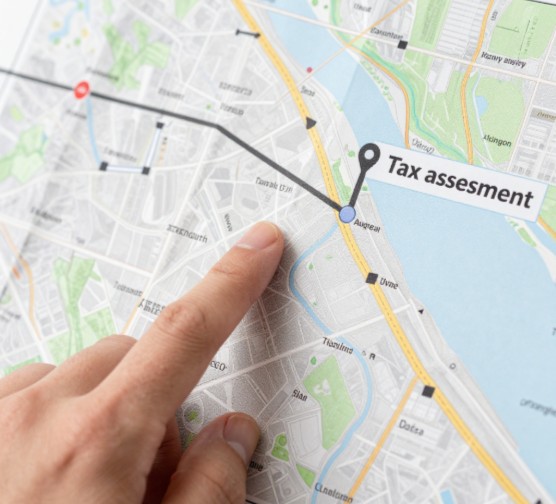


Many SME decision makers believe that tax disputes are about how much tax is owed. In reality, they are about who controls information, who makes assumptions, and who carries the burden of proof.
Kenya’s Tax Procedures Act (TPA) is the law that governs how taxes are administered, assessed, disputed, and enforced. While substantive tax laws (Income Tax Act, VAT Act, Excise Duty Act) define what is taxable, the TPA defines how the Kenya Revenue Authority (KRA) enforces compliance.
And on that front, the law is deliberately skewed in favour of the revenue authority.
This is not a flaw. It is a design choice. But it has serious implications for SMEs.
The Hidden Reality: Tax Procedure Determines Outcomes
Most tax disputes are not lost because the business deliberately evaded tax. They are lost because:
- Records are incomplete or informal
- Systems are weak
- Decisions were undocumented
- Cash flows do not match reported figures
Under the TPA, weak documentation is treated as risk, and risk is priced through aggressive assessments.
Three sections of the Act explain why.
- Section 59: KRA’s Power to Access Records
Section 59 of the Tax Procedures Act gives KRA wide powers to:
- Access, inspect, and copy business records
- Enter business premises
- Obtain information from third parties such as banks, suppliers, customers, and agents
Crucially, KRA does not need proof of wrongdoing before exercising these powers. Suspicion or routine compliance checks are sufficient.
Why this matters for SMEs
SMEs often operate with:
- Manual or partially digitised records
- Informal credit arrangements
- Poor separation between personal and business finances
When KRA accesses third-party data—especially bank records—it can reconstruct business activity in ways that do not reflect operational reality, but are nonetheless legally permissible.
Once that data is obtained, the taxpayer no longer controls the narrative.
- Section 31: Assessments Based on “Available Information”
Section 31 allows KRA to raise a tax assessment where:
- Returns are not filed
- Returns are incomplete or inaccurate
- Records are inadequate
In such cases, KRA may assess tax using “available information.”
This phrase is powerful because it is intentionally broad.
“Available information” may include:
- Bank deposits
- Industry benchmarks
- Prior years’ performance
- Third-party declarations
The assessment does not need to be exact. It only needs to be reasonable from KRA’s perspective.
The SME risk
If records are weak:
- Gross bank inflows may be treated as turnover
- Industry margins may be applied regardless of your cost structure
- Cash timing differences may be ignored
The result is often an assessment that is economically inaccurate but legally enforceable.
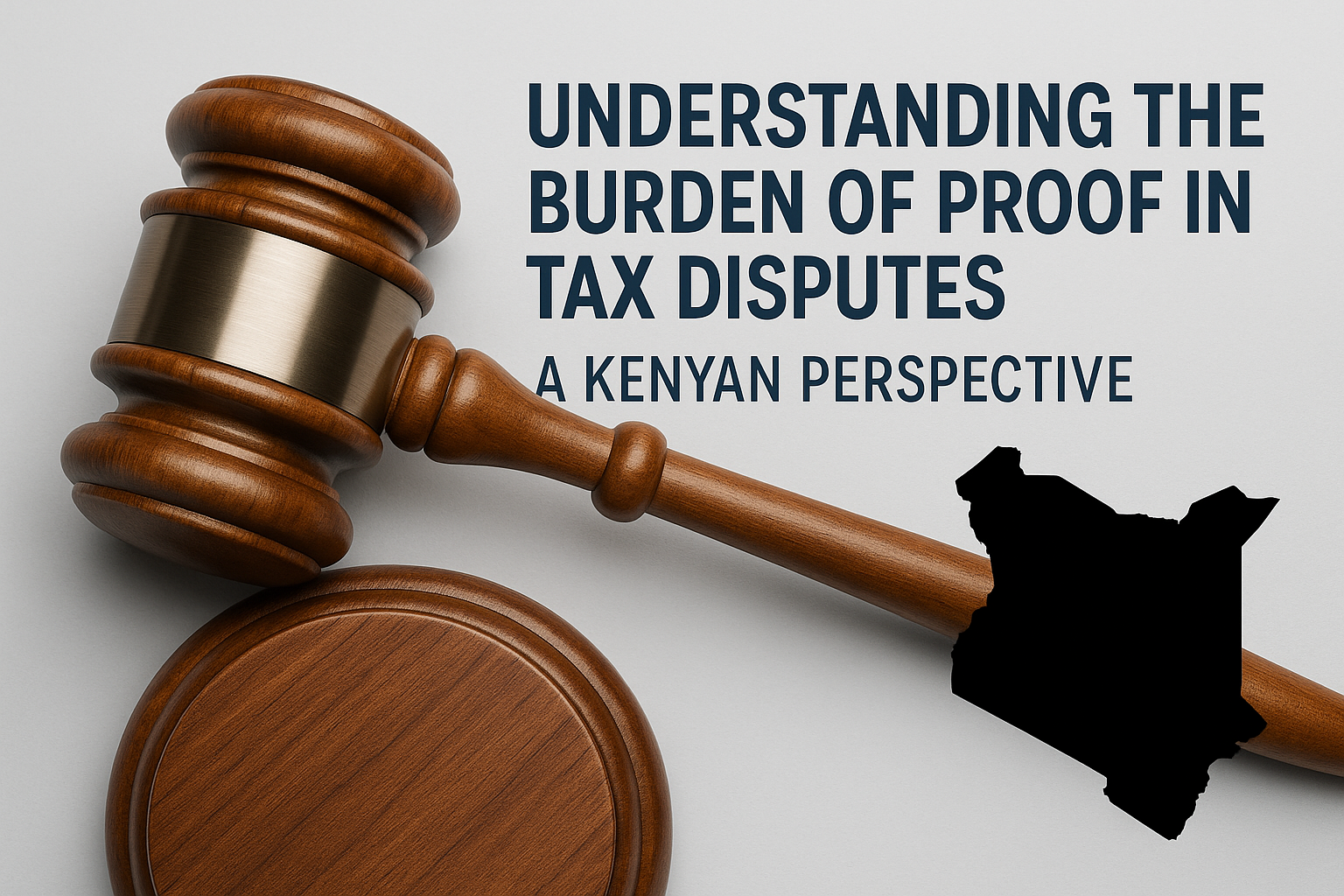
- Section 56: The Burden of Proof Lies on the Taxpayer
This is where many SMEs are caught off-guard.
Section 56 states that in any tax dispute, the burden of proof lies with the taxpayer. In simple terms:
KRA does not have to prove its assessment is correct.
The taxpayer must prove it is wrong.
This reverses what many business owners assume to be a fair starting point.
What this means in practice
- Explanations without documents carry little weight
- Reconstructed records are often rejected
- Missing invoices or contracts can collapse an objection
Even if the assessment is harsh, the law requires evidence, not logic, to overturn it.
How These Provisions Work Together
These three sections form a powerful enforcement loop:
- KRA accesses information (Section 59)
- KRA raises an estimated assessment (Section 31)
- The taxpayer must disprove it (Section 56)
Once this loop is triggered, the SME is always on the defensive.
Disputes are won not by fairness, but by process and documentation.
Why the Law Is Designed This Way
From a policy perspective:
- The State assumes taxpayers control information
- Informality increases compliance risk
- The tax authority must protect revenue efficiently
The TPA therefore:
- Penalises poor systems
- Rewards disciplined record-keeping
- Pushes businesses toward formalisation
The downside is that legitimate SMEs can be assessed into distress, not because they underpaid tax, but because they could not prove otherwise.
What SMEs Must Do Differently
The key lesson is that Tax risk is no longer about tax rates. It is about evidence readiness. SMEs should:
- Invest in proper bookkeeping and documentation
- Separate personal and business finances
- Maintain clear audit trails for revenue and expenses
- Treat tax compliance as a risk management function, not an annual filing task
Waiting for an audit to “explain later” is no longer viable under the TPA.
Parting shot
Under the Tax Procedures Act, procedure beats intent, and records beat explanations. For SMEs, the safest position is not hoping for fairness—but building systems that never require mercy. In today’s tax environment, clean books are not a luxury. They are protection.